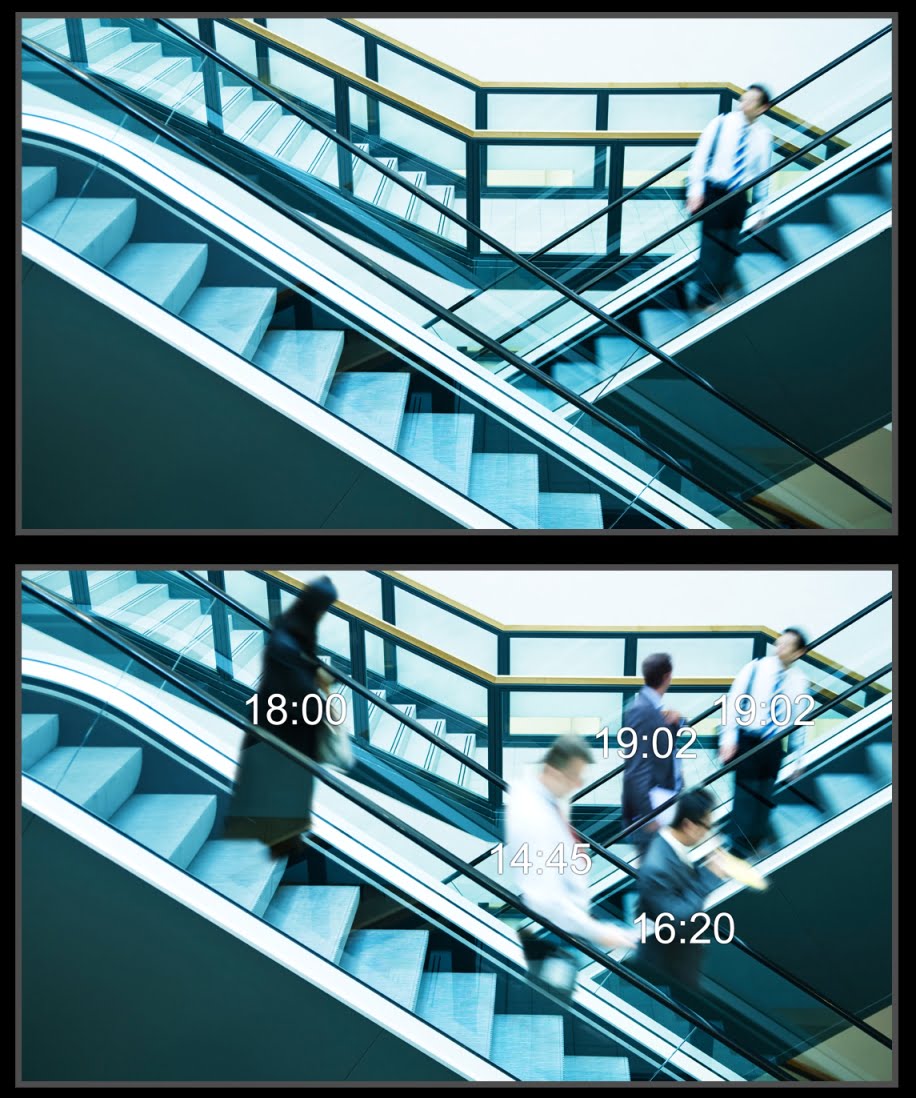
BriefCam’s Instant Video Surveillance Helps To Quickly Catch Terrorists, Criminals

By Andrey Kastelmacher, NoCamels February 18, 2015

One of the most innovative technologies in this field was developed by Israeli company BriefCam, which helped in catching the Boston Marathon bombers. Using tracking algorithms, BriefCam enables users to track events caught on tape much more quickly, thus maximizing the potential of video surveillance.

A search engine for videos

Founded in 2007, BriefCam is an Israeli startup that developed video analysis software called Video Synopsis. It condenses hours of footage into minutes, making it easier and faster to analyze data. The software helps in identifying suspects, criminal incidents, stolen items and more. “Essentially, it’s a video search engine,” Dror Irani, BriefCam’s CEO and president, tells NoCamels. This searching capability is achieved through new, complex video tracking algorithms.

     SEE ALSO: Big Brother? Microsoft Unveils Technology To Recognize Faces In Video

Video Synopsis takes long videos and visually indexes them automatically; in fact, it converges many films that contain multiple objects in order to create a simultaneous presentation of events that happened at different times. BriefCam’s technology adds advanced analysis capabilities in order to manage multiple video files that are extremely large. The advantage of BriefCam’s solution it that it can create a digest of many hours of filming, which shortens the video to a few seconds or minutes, depending on the original length of the video. With BriefCam’s product, a gate supervisor at an airport, for example, can quickly scan a daylong video by watching only the important segments.

A mapping algorithm also enables users to refine the video search: They can look for a specific object using parameters such as color and size. So, if you’re looking for a green truck, you don’t need to watch all the white trucks or smaller cars going through the frame.


From the Boston Marathon to the Statue of Liberty, BriefCam takes part in homeland security 

Right after the Boston Marathon bombings of 2013, BriefCam helped the FBI in identifying the Tsarnaev brothers in the surveillance videos. After Hurricane Sandy had struck Liberty Island, BriefCam and its partners installed a new, advanced security system (which combines software and hardware) on top of the Statue of Liberty. The US Park Police, National Park Service and the US Department of Interior are also clients of BriefCam, as well as law enforcement agencies in North America, Europe, Asia and Israel.

     SEE ALSO: Cyber Security Nation: Why Israel Leads The World In Protecting The Web

BriefCam is one player in the multi-billion-dollar Israeli defense industry, which includes dozens of companies in the fields of video surveillance, homeland security, defense equipment and components, raw materials and fire protection.

Family home videos inspired BriefCam

BriefCam did not begin as a surveillance tool but rather something far from it. It was designed to track moments from family videos. Eventually, this “domestic” invention transformed into a powerful security tool that can potentially save lives and help law enforcement.

However, surveillance technologies such as Video Synopsis and CCTV are controversial because the tracking and monitoring of people can also clash with privacy. Opponents of video surveillance have argued that it hurts civil liberties. Proponents say they are willing to accept some invasion of privacy in exchange for the safety video surveillance provides.

It’s important to mention that BriefCam’s Video Synopsis isn’t only used for security purposes; it is also used in office buildings and shopping centers, for data mining and to monitor customer behavior. Additionally, this technology is about to be used in smart homes. A recent BriefCam project with FLIR Systems, which manufactures surveillance cameras, provides a cloud-based Video Synopsis tool for monitoring your home – even your refrigerator, if you put a camera in the kitchen. Sounds strange? Well, according to Irani, monitoring food consumption can actually promote a healthier lifestyle for families!

BriefCam worked closely with the Hebrew University on the development of the product, and the university holds shares in BriefCam as the owner of the Video Synopsis algorithm.

BriefCam

Photos and video courtesy of BriefCam

Enhanced BriefCam Syndex to Launch at ISC West 2015

Rapid video review turns raw video data into usable information. BriefCam Syndex 3.1’s next-generation tracking engine offers users insight into metadata. Modi’in, Israel, April 8, 2015 – BriefCam® (www.briefcam.com), the developer and provider of award-winning Video Synopsis® solutions for rapid review and analysis of video, will launch its newest version, BriefCam Syndex 3.1, at the security industry’s premiere exhibition, ISC West 2015 in Las Vegas.

BriefCam_Syndex_3.1_1BriefCam_Syndex_3.1_2

BriefCam Video Synopsis technology indexes, recalls and displays events in a condensed format without losing a single event, and without changes to the original video evidence. BriefCam Syndex is offered as a standalone product, or an integrated or embedded part of the VMS environment.

BriefCam Syndex 3.1 offers an enhanced set of tools – Smart Synopsis – for further refining the basic Video Synopsis. In addition to being able to search video by parameters like color, direction, size and speed, similarity, area of interest/exclusion and in/out zoom, the BriefCam Syndex next-generation computer vision engine has been upgraded for even better object detection and tracking, processing performance, improved display, and additional capabilities. These include:

Refine by Path – A path is the combination of directions that the object took while onscreen. For example: a person going left and then right, will be presented in a Video Synopsis of all objects taking a similar path.

Refine by Dwell Time – Refines the video according to the amount of time an object stays in place while onscreen.  For example: a car moving along the scene, stopping for 10 seconds, and then moving, will be presented in a Video Synopsis of all objects that stayed in one place between 5 and 10 seconds.

Chronological Retiming – In addition to the Video Synopsis standard of presenting objects in non-chronological order, users now have the option of arranging objects according to the order in which they came on-screen.

Hierarchical Ordering & Sorting – Users can now view objects by size or speed in hierarchical order, from largest to smallest, fastest to slowest – and vice versa.

In addition, enterprise-grade versions of BriefCam Syndex 3.1 now offer simultaneous support for multiple VMS types, able to concurrently fetch video originating from different vendor VMSs operating in large heterogeneous environments such as safe-cities, transportation and more.

Infrastructure enhancements have been added for improved robustness, ease of deployment and maintenance.

Dror Irani, CEO and President of BriefCam, said, “Our aim is to transform raw video data into usable information. Our next-generation computer vision engine generates metadata. In essence, the tracking engine becomes a value-extraction machine. Once they are armed with information, users can gain insight from it for a range of purposes”.

BriefCam will be presenting BriefCam Syndex 3.1 at ISC West, 15-17 April, at the Sands Expo Center, Las Vegas, NV, USA. To view a demonstration, visit BriefCam at the following booths Milestone (#20060), Genetec (#10053), and Siemens (#22057). To arrange a meeting in advance: http://briefcam.com/meet-briefcam-isc-west/

Ipswich City Council Upgrades Safecity CCTV System

Submitted on Fri, 04/24/2015 – 15:37

Larry Waite, Ipswich City Council Safe City Security Coordinator

Larry Waite, Ipswich City Council Safe City Security Coordinator

Ipswich City Council has upgraded its Safe City public surveillance solution to Genetec Security Center and added Briefcam. The integration was undertaken by Elbex Access and Security.

IPSWICH City Council owns and manages one of the oldest and best known public surveillance systems in Australia. It was installed in 1994 and represented the best video surveillance technology of the day, including extremely capable Elbex EX2000 motorised PTZs, and multiple Elbex PTZ pendent domes.

The original system was installed by Council in response to rising street crime and the designers and operators of the Safe City solution were tasked with making Ipswich safer for its citizens. In partnership with Ipswich Police, and with unqualified long term support from Ipswich City Council, that goal has been well and truly realised for more than 2 decades.

Around 3 years ago it was decided that to open the Safe City solution to IP camera technology, as well as to bring Council’s adjacent security surveillance system into the Safe City control room, a new video management system was needed. After a 2-year testing period, Council chose to install Genetec Security Centre, a VMS designed from the ground up to be hardware agnostic. The Genetec Security Center solution was in the process of being upgraded to Version 5.2 SR9 when I visited, and will be upgraded to 5.3 shortly.

I took a tour of the Ipswich system with Larry Waite, Safe City security coordinator at Ipswich City Council and David Keidar, CTO of integrator, Elbex Access and Security. Both Waite and Keidar have an association with the site that stretches all the way back to that original installation and they express the same seamless ownership of its history and operation.

Waite first began working on the system as a supervising contractor in 1994, became contract manager for the site, then joined Council as an employee in 2011. His breadth of experience makes him an excellent guide. Managing a test bed as challenging and diverse as Safe City has rendered Waite a pure empiricist when it comes to claims about camera technology, and he has an holistic sense of technology and procedure. Nothing that fails to enhance the objective operational performance of the system will be integrated into the Safe City solution.

“We have 2 different systems, a Safe City system and Council’s 270 static security cameras, which monitor Ipswich Council’s infrastructure,” Waite tells me. “There are about 240 cameras in the Safe City system and the video signals come back to the Safe City control room on Council’s intranet, which is now mostly fibre and supports all Council’s network requirements.

“While we share a fibre for Council’s security camera video streams, for Safe City cameras we use our own dedicated Safe City fibre, which ensures we have no issues with bandwidth. The Safe City cameras are mainly PTZs and about 35 fixed cameras.

Fit for purpose

While Council’s static security cameras simply monitor council assets and infrastructure, the Safe City surveillance solution installed in public spaces is designed solely for public safety, for protecting the public and public property.

“Ipswich City Council owns and runs the Safe City system and the Safe City team is responsible to the committee of council – including the CEO and mayor,” explains Waite. “Also governing the system are a number of procedures that cover operations, and the retention and release of video.”

Footage from Safe City’s cameras can be viewed by police live or supplied in support of investigations and prosecutions. The symbiotic relationship between Safe City and Queensland Police Service goes back to the early days when the 2 shared an operations centre in Ipswich Mall. As well as assisting with investigations, the Safe City team also works in real time with police officers when required.

As part of this relationship there’s a memorandum of agreement between the City of Ipswich and Queensland Police Service in which each agrees to work to increase effectiveness of community policing, to identify long term preventative measures that reduce crime and improve safety, to recognise roles and accountabilities of individuals groups and agencies to provide a safer environment for all, and exchange information freely to address common concerns.

The Safe City upgrade

Safe City’s VMS upgrade and the integration of Council’s formerly separate security cameras into the Safe City control room is built around Council’s unprecedented fibre intranet, which stretches for tens of kilometres across the council area. The upgrade from the former video management solution to Genetec Security Center is designed to make Council device agnostic – not just to video surveillance cameras, but to any other devices Council may choose to incorporate into its solution in the future.

With the new VMS, changes on the perimeter of the system – new cameras or any other devices in the future – have no impact on the functionality of Genetec Security Center in the control room. Important, too, the new system means that as well as installing the latest IP cameras, Council can continue to leverage its existing analogue cameras, and deploy medium-term solutions such as HD-SDI technology, that use existing coaxial infrastructure.


SafeCity Control Room

“We are in the process of phasing out all the analogue cameras – we must be getting close to 50 per cent,” Waite says. “There are more cameras arriving all the time to allow us to swap out the old cameras and move to IP. Currently, however, we have IP and legacy analogue. We run a bit of everything, including Panasonic, Pelco, Samsung, Bosch, Axis and the Elbex analogue cameras – I think we might even have some Ikegami cameras still in the system.”

Waite says a key part of preparing the system for the future involved selecting the right VMS.

“We spent 2 years trialling VMS solutions before deciding on Genetec – we set up a mini control room and tested different solutions over that time. It was an important decision. As well as an open solution, you obviously need a VMS that delivers more than just an image stream – it needs to access all the capabilities of your cameras.”

Given Safe City is a mature application comprising legacy technologies, it seems only natural there be a large number of analogue cameras working together with new HD PTZ cameras. As we chat my immediate thought is that Council is careful with budget but as Waite and Keidar discuss the system and, later on when I see applications of cutting edge technologies, I realise there’s something else at work here.

Same as all public surveillance solutions, Ipswich Council is a 24-hour site and the size and scope of its camera installation, the variability of light sources in Ipswich Mall, along major roads, and in backstreets, covered walkways and parklands, means that low light performance is not merely paramount but utterly central to core system functionality.


Elbex analogue PTZ

“Part of the reason it has taken so long for Ipswich City Council to undertake this process of upgrade is the strong low light performance of Elbex analogue PTZ cameras,” Keidar explains. “The cameras have a ½-inch sensor, good quality glass optics and a slow speed shutter, a combination which makes them very sensitive to low light.

“Over the years we have been constantly trying new cameras and we just could not find anything that performed as well throughout a 24-hour operational cycle as the existing Elbex cameras,” he says.

“The first HD camera that managed to break into the system was the Axis Q6044 720p HD PTZ. We are using 720p simply because in the real world it’s more sensitive in low light – we would love the higher resolution of 1080p HD but for our needs low light performance is paramount.

“The next HD camera we brought in was a Pelco PTZ, which you simply take out of the box, bolt to a wall and it runs, so in that sense it’s a very easy camera to use for an upgrade like this one,” Waite explains. “Pretty much every camera we could find we have tried in a 24-hour real time application and the process never ends because this system is large and always growing.”

Because of the demanding nature of the site and its local and international reputation, Waite says there are plenty of quality manufacturers eager to supply cameras for the Safe City system.

“When it comes to technology, we never dive into anything – we’ve always sat back and waited to see what was available and to trial before we buy,” says Waite. “When things are applied in the real world, they may not work as well as they do on a stand at a trade show.

“Every salesperson says they have the best camera – no matter who you speak to they always have the best camera. Rather than getting in a debate with them, we ask for a sample, install it in the field and then tell manufacturers or suppliers how good their camera is from the perspective of our own application.”

Touring the system

While we talk, we’re driving around the streets of Ipswich and some things really stick out. The first is the huge geographical size of the application and second is the number of cameras – there are a lot of them, mostly PTZs.

Underlying both these parameters is the hidden power of that enormous fibre infrastructure. In other applications side-boring or wireless links might consume significant chunks of budget and demand intense planning but Council’s fibre foresight dissembles all those agonies into irrelevance.

As part of our tour, we hop out of the car and check out a number of camera pole installations. Some have an analogue PTZ and an IP fixed camera, another has a pair of analogue domes, one Bosch and one Elbex. They are ported into a nearby pit for power and comms, just as all the cameras are on this system.


Custom camera poles

“There’s a pattern to the trenching for the cameras – the furthest camera is Rosewood, about 30km from here on the fibre LAN. That distance shows how extensive this solution actually is,” Waite tells me.

On Brisbane St we cruise past 11 camera and pole installations along a 2km stretch. Many of the dedicated camera poles have a Bosch static camera covering a nearby taxi rank or bus stop, as well as a PTZ, allowing 360-degree views for hundreds of metres in all directions. Cameras are thoughtfully located in areas of perceived public risk that are informed by experience and in cooperation with Queensland Police Service, which has been engaged with the project since its inception.

Later when we walk the CBD mall and adjacent side streets I’m doubly surprised by the number of cameras here and the fact many of them are Elbex analogue PTZs. Clearly, Safe City has had comprehensive coverage of the Ipswich CBD for many years. As well as the main mall and multiple key streets, locations like walking tracks and pathways over bridge are covered by multiple camera views. The bridge walkway is further supported by Help Points and a PA, which directly communicates with the Safe City Control Room.

The control room

The Safe City control room is accessed through a car park in a Council-owned building in the town centre. The site also supports security officers who patrol the city and the adjacent car park makes the location very convenient for this combined purpose.

While the control room was not built as a dedicated control room, it’s a very workable space – secure and large enough to contain administrative offices, the control room with its video wall and workstations, a large meeting room and a network room containing the decoders, switches and servers that support the system. The control room itself is large laterally and the video wall is enormous. This may not be the largest video wall in Australia but it’s big – I’ve not seen anything as big recently.

Walking into the Safe City control room you feel it’s a warm and friendly working environment and this opinion is only confirmed after spending a couple of hours with the team. You can also see it’s a working space – there are 2 operators on duty when we arrive and they go through what look to me to be a series of set procedures with quiet efficiency. Each of the workstations is set up with Genetec Security Center software and the viewer is familiar Genetec, everything is in easy reach of an operator’s mouse click.

It’s a measure of the capability of a VMS that it blends into the functionality of a control room’s operation and Security Center achieves this slick invisibility. Throughout my visit there’s not a single instance in which the management system sticks an awkward elbow into the face of the operators. Everything just works.

Having recently sat down with the latest version of this software, I’m acutely aware we are viewing the tip of an iceberg. Ipswich City Council’s future is now set up across CCTV, access control, intrusion and global integration of sub systems and business systems. Something else with Genetec is that there’s no annual per-channel license fee. Instead there’s a non-compulsory software maintenance agreement that entitles a user to direct support from Genetec and ongoing upgrades to the latest version. Nice.

As part of Safe City’s policy of actively engaging with cameras, Waite says operators are always using VMS functionality to actively search for incidents. This way of working the system is informed by long experience and is in part predicated on system size.

“If we had 250 image streams all touring at once it would drive operators crazy,” Waite explains. “We need to be more systematic than that. We found many years ago that once the system grew past a certain point the automatic tours were no longer working for us.

“Instead what we do is target hotspots based on our experience. At a given time of a certain day we will move cameras and park them to view particular locations where events have occurred in the past. We can do this in part because of the nature of Ipswich. In a major city, hotspots are not so predictable or easy to ascertain.

“From an operational point of view, I think of the cameras as a fishing net we throw over the city,” Waite says, narrowing his eyes thoughtfully.

“Every knot in the net is a camera – take cameras away and you create holes in the net, while strategically placing a camera will capture everything that moves in and out of a particular area. It’s a philosophy we’ve developed over many years based on observation.


Bosch dome in the shopping centre

“Do police have access to Safe City video feeds or do your operators steer them to events in real time?” I ask.

“A little of both,” explains Waite. “You see those 2 large monitors in the centre of the display – those images can be sent through to the shift supervisor at the police station about 1km away, as well as to the police communication room about 5km away.

“We can also communicate over police radio and inform police of an event on screen and assist them in real time – but if they want to review or get copies of that footage then they need to come to us and follow one of 2 separate documentation processes. Certainly police appreciate the system and the courts love it because when faced with clear video evidence most perpetrators plead guilty, so cases are not dragged through the courts.”

With the upgrade to Genetec Security Center has come the capability to work more effectively with police officers when they are on patrol.

“We now have tablets that we can give to police so they have mobile footage of events in real time,” says Waite. “For instance, police can see all the cameras in the mall in a 9-screen split on a tablet. This allows police to see what’s going on in the next street over during the process of an operation.

“Using police radio, police officers can tell us who they are looking for and we can say – ‘they are on such and such street’. Police can then zoom in using the tablets to identify individuals and then take appropriate action to apprehend offenders. This new mobile component of the Genetec system is very flexible. We’ve only used it in the CBD with police so far, but it can be used in parks by our rangers, too.”


That’s Briefcam in the middle, displaying only this morning’s red cars (and jumpers)…

Smack in the middle of the video wall is something I’ve never seen in the wild – an application of Briefcam. For the uninitiated, BriefCam VS Forensics is a PC-based software solution that takes large video streams covering many hours of events and compresses them into seconds.

It goes without saying that for security teams on large sites with hundreds of cameras, the process of mining video streams searching for reported events can be a full-time job. Essentially, BriefCam’s VS Forensics solution synthesises events from real time video streams, presenting them as compact, overlaid progressions of events, which each event time-tagged.

Operationally, what this means is that an entire morning’s events can be compressed into 5 minutes of video, with events overlayed not quite on top of each other so the eye can see multiple persons and/or vehicles moving across the screen, each tagged with an event time. Operators simply select video clips based on time and appearance to play in real time. While Briefcam can be installed as a task in Genetec Security Center, at Safe City the solution runs independently, with operators pulling video streams into Briefcam whenever required.

According to Waite, Briefcam allows the team to ask it to only show green cars that have passed a camera, if that’s what they are looking for, or the red cars, based on the direction of travel and other parameters. As Waite explains, operator Justin processes a video stream of morning traffic through Briefcam to demonstrate and it’s flat-out amazing. Without any more than a minute’s delay, Briefcam serves up time-stamped footage of every red car that has passed the camera that morning, all overlaid on one composite image stream. It’s just awesome.

“Basically you set up the parameters and BriefCam goes to work compiling the footage using metadata and metatags,” says Waite. “You give BriefCam the camera and say ‘look for a particular thing over 12 hours’ and you go away and work on something else for 10 minutes and when you come back, the task has been completed. Briefcam sorts through the metadata and finds the footage on our servers and collects it on its own server. We can find the answers very fast – a stolen car or a missing child just using details like the colour of a shirt or hat.”


Briefcam chewing a day of data…

Waite says Safe City’s installation of Briefcam is part of a policy of applying technology that allows the control room operators to work at maximum efficiency.

“A key to our thinking with BriefCam is that we can’t keep adding more staff as the system grows each year – operators will be tripping over each other,” says Waite. “We need to start looking at smarter ways to do time consuming things and Briefcam really meets that demand. It certainly takes the time out of searching.

“We’ve only had the system for a couple of weeks so we are still getting used to it. Operationally, we installed it to allow us to keep an eye on events in some of the quiet areas we typically don’t have to monitor in real time but want to keep an eye on as efficiently as possible. We also plan to use Briefcam to help us manage our new waterpark. We think it will be a great help locating lost children – we can search for shirt colour, as well as searching on the basis of time.”

Waite can’t help revealing the experimental nature of the Safe City team. Even though the system has only just been installed, he’s already thinking about using it to empower more of the system.

“Briefcam is designed for use with static cameras not speed domes but I think if we leave a PTZ stationary then we think we can use it to run through all the events viewed by the PTZ for the period of time it’s parked,” he says with a grin. “It’s certainly our intention to find out if that’s the case.”

According to Keidar, the installation of Briefcam at Safe City has been as big a deal for the distributor as it is for the end user.

“When we went through the process of installing Briefcam it was an exciting first for them as well,” he says. “It’s an expensive solution but for an application that suits it, there’s nothing that fits this requirement as effectively.”

Waite agrees.

“Same as everything we install here, there was a long process of consideration with Briefcam,” he says. “We had previewed it in multiple ways. We looked at all the footage on Youtube, we read all the literature and then we got Hills in and they talked about what Briefcam could do for us.

“Within minutes of Briefcam being powered up and set to processing a video stream from one of our SafeCity cameras we all realised this solution was even more capable than we had thought. It’s just going to save a lot of time and that was the whole point of using it.”

While I’m in the control room I can’t help but ask the operators what they think of the new Genetec system. Both nod in agreement that it’s very good and Justin points out that the learning process has been relatively simple. It’s hard not to go sideways from there. In their experience, is HD better than analogue?

“In the daylight conditions, HD is great,” the boys tell me.

On the split screens of the video wall it’s hard to see higher resolution and what I find immediately interesting is how well the Elbex cameras are doing in terms of colour rendition and contrast. Then Justin calls up an Elbex camera on one of the big centre screens for comparison. We are all agreeing the image is nice when he pulls across an HD feed and oh yeah, there’s a big difference in resolution, colour, contrast.

Of course, these are the latest HD cameras, while the Elbex cameras are nearly 10 years old. And image quality during the day is only half the story. As we are viewing the cameras, operator Jeff surprises me by announcing quite unprompted: “You still can’t beat the Elbex cameras at night time.”

He’s not alone in his opinion. Justin agrees with alacrity.

“That’s true,” he says. “With that camera Elbex really got it right.”

“Would illumination levels be under 10 lux at night system-wide?” I ask.

“Yes – it’s definitely under 10 lux in many places at night,” Waite says. “But the video wall really does look spectacular at night – that’s the best time to see the screens. The performance of the cameras in this system after dark is fantastic. We do have a couple of parks where the scene is dull and other security camera locations where we turn lights off. But globally, performance is very good.”

“I have to ask on behalf of SEN readers – what’s your favourite camera in the system in terms of all round performance?” I ask.

According to Waite, that’s a tricky question to answer.

“Certain cameras give us strong performance in different ways,” he says. “The 720p Axis PTZ camera gives us the best images through a 24-hour period, while the Pelco PTZ is very good out of the box when it comes to easy installation. When it comes to the analogue and IP, the performance gap in favour of analogue at night has definitely closed over the last 18 months and it’s now going the other way.”

Waite also has some astute observations about the network demands of IP cameras in real world applications.

“There’s no doubt that bandwidth is an issue with digital,” he says. “We find that while analogue cameras might need 3-3.5Mbps, an IP camera will need 5-25Mbps, depending on how much movement is going on in the scene. Obviously, you can limit bandwidth demand but if you strip away the quality you lose the reason for the choosing HD in the first place.

“We also want 25ips in our application. People say you can’t see the difference between 12.5 and 25 with the naked eye but you definitely can. Given these conflicting needs, an IP video system is a competition for resources.

“As I explain it, all the resources of the system go into creating the best possible recordings and what resources are left over go to the video wall we are looking at,” Waite says. “This means that at times of system stress you get a flicker on the video wall that you don’t see on the real time recordings. It’s a balancing act but we are close to getting what we need. A resolution of 1080p HD is all we need here if the low light performance is good.”

It’s now late in the afternoon and looking at the video wall as the sun is sinking and the light is softening, images are definitely looking better. We’re losing hard shadows ISO is retreating to sensible levels and peace has been declared in the exposure wars which can impact on image quality as cameras struggle to balance areas of shadow and intense sunlight. This said, we’re now seeing some lens and dome bubble flare as the sun gets closer to the horizon.


Storage array and servers

Next, Waite shows me the server room. It’s a good space for the job, long and with enough access front and rear of the racks. Everything in the room relates to the Safe City solution – encoders, switches and servers. Fibres from the dedicated Council intranet come into the building’s riser, go into decoders in the server rack, through switches and flow to recording servers first, then via PCs (soon to be upgraded) to the video wall. Recording is at 25ips per channel in high definition with a 14-day retention time.

Because of the maturity of the Safe City application, there’s new and old hardware in the server room but it’s all now running the latest Genetec software.

“Something Genetec Security Centre does that’s extremely important to us is scale,” says Waite. “There is no limit in terms of growth and that’s excellent from our perspective. Every time we add more cameras we can just add more hard drives and expand the system.”


And the switches…

“What were the challenges the Safe City team needed to overcome during the process of upgrade?” I ask.

“There were some challenges,” Waite explains. “It can be challenging to configure a video wall so there’s no latency.”

Training was another area that needed careful attention.

“There were also some training challenges – some people embrace changes in technology better than others, it takes them less time to re-learn,” Waite explains. “It can take people a while to learn to think outside the box they are comfortable in, in this case to realise Genetec can do more than they are used to being able to do with another VMS.

“There have been instances where old procedures have been used – for instance, burning of footage to disk using third party software instead of dragging and dropping a video stream within Security Center itself. At the same time team has found and shared new ways to handle procedures that are much more efficient than the old ways.”

Success of the system

Given the longevity of this system and its mission to provide safety to the people of Ipswich, it’s not surprising Waite and the Safe City team have a strong sense it has made a difference to the community by modifying behaviour.

“This is system absolutely has had an impact,” Waite says. “There are a number of reasons for this, in my opinion. In Ipswich, while we have some tourism, most the people here are local so we know most of our offenders. Ipswich is not a capital city where there are unknown people coming in from all over Australia and all around the world, it’s more like a big country town.


It does feel just like a big country town… 

“For these reasons the Safe City system has led to what is touted as a 78 per cent reduction in crime compared to the year before the system was installed, despite a much larger population. Crimes we used to get in Ipswich like bag snatches, car thefts, armed robbery and thefts at ATM machines – we simply don’t see those types of offenses anymore,” Waite says. “Instead the offenses we see are far less severe. They are alcohol related, opportunistic, school holiday muck-ups, mostly quite minor.

“Police are able to deal with recidivist offenders very quickly and more effectively, compared to a large city. If we see something occur, we may not know a person’s name but you can bet the police will, because it’s a small community.”

According to Waite, when it comes to a sense of safety, at lot of it is about perception.

“The public perception of danger might not reflect reality. For instance, we have groups who gather in the mall and are sometimes perceived as threatening. But the people who live and work in Ipswich know that while there may be certain groups who have the odd argument, they are socialising in the mall, not harassing the public. So part of the process is to focus on changing public perception into something more positive.”

Conclusion

The process of upgrading to Genetec Security Center has been about prepared for the future. What does that future hold? Waite believes that uncertainty about the future is the entire point of the upgrade.

“Who knows what’s going to happen in the next 12-18 months?” he asks. “At the moment our goal is to continue the process of going digital. Eventually we’ll take Council’s static camera system digital over a 5-10 year period, funds allowing. For instance, we added Genetec license plate recognition last week and we have it monitoring one street in Ipswich just to see how well it works.

“At this stage it seems to have some strong capabilities – especially from a police point of view in terms of helping to identify stolen cars and the like. It’s something we look at. Because we have the facilities and the fibre network, we can play with technologies and then get back to suppliers with honest feedback.

“Within our Safe City brief, we will continue to experiment with what technology is out there. We recently looked at a camera with a focusing long distance laser light, which we decided was not really suitable for what we do and we are currently testing some 360-degree 5MP cameras for Council retail applications. In some of our facilities we might have 7-8 cameras watching a retail counter, where a single 360-degree camera could handle the same task.

“Once you start going IP you can apply it to any number of devices, so we’ll be looking at ways to integrate other subsystems and devices into the system to increase functionality and efficiency,” Waite says. “We will never stop seeking clever new solutions that will make the Safe City system more efficient for staff and Ipswich safer for the public.”  ♦

By John Adams

Part GoPro, Part Dropcam: Flir’s FX Camera Does Sports, Surveillance

  • A new camera can keep watch over your home or mount to your dashboard or snowboarding helmet to capture action footage. The Flir FX is targeting the audiences for both Dropcam and GoPro, while bringing a killer feature along in its Android and iOS companion app.

With RapidRecap, the FX does something its competitors can’t: record a day’s worth of action, overlay all the movement, and play it back simultaneously, so you can see everything that happened all at once. It feels a bit like a Dr. Who episode—people, animals and objects moving past each other, with timestamps over their heads showing they were actually never together. Tap a time stamp, and the Flir FX app plays that specific chunk of footage on its own. Footage is condensed into RapidRecaps in the cloud.

Flir’s RapidRecap overlays multiple events to let users review hours of photos in minutes.
Flir Systems

The FX isn’t actually continuously recording. Instead, the camera’s motion sensor tells the device to start recording whenever something in front of it moves, day or night. (The FX can shoot in infrared night vision, but can’t do thermal imaging like its sibling products.) The app also lets you see a live stream of whatever’s happening in front of your camera in real time as well—in case you want to, for example, check in on the house while you’re out on vacation.

The FX records at resolution up to 1080p, with a super-wide 160-degree viewing angle. When detached from the included AC adapter, it can go four hours on its battery, more than a GoPro GPRO +0.56%. It records wirelessly, uploading video to the cloud via Wi-Fi. If there’s no Wi-Fi, it can also record to a MicroSD card. Flir is selling four different housings for the FX: an indoor stand; an outdoor housing that will shield the camera from the elements and add additional LEDs for night vision; a plastic sport case that’s waterproof to a 65-foot depth; and a dashboard mount for those who want to record while driving.

The Flir FX’s outdoor housing adds extra LED lights for a longer night vision distance.
Flir Systems

As fascinating as it is that Flir is taking on both of the popular cameras of the moment, it’s worth noting that these activities are mutually exclusive. What’s watching your house when you take your camera with you to the ski lodge? To reap the same benefits, you’ll still have to buy two—or a Dropcam and a GoPro.

The FX is available for pre-order starting today, shipping later this month to retailers such as Best Buy BBY -1.63%, Target, Home Depot HD -1.18%, Sam’s Club, Amazon and others. The FX will sell for $200 ($250 when bundled with the outdoor housing). Every FX gets a basic version of Flir’s cloud service which stores the last 48 hours of footage, and includes three RapidRecaps a month. For $10 a month, users get access to seven days of footage and an unlimited number of RapidRecaps. For $20, the premium service includes 30 days of footage storage and unlimited RapidRecaps.

The Flir FX can also be a dashcam.
Flir Systems

AposTherapy Completes New Financing; Announces Global Expansion Initiatives

AposTherapy Completes New Financing; Announces Global Expansion Initiatives

Names Dr. David Levy, Donald Almeida, Dr. Michael Stocker, Rt Hon Alan Milburn To Expanded Board
NEW YORK, Dec. 3, 2014 /PRNewswire/ — AposTherapy announced that it has completed a new round of financing and is launching a global initiative to offer its technology and treatment through premier physical therapy centers and orthopedics practices. To date, the company has provided drug-free and surgery-free treatment to over 50,000 patients worldwide who suffer from osteoarthritis of the knee.
The company also announced an expanded Board of Directors, whose members include some of the most accomplished leaders in medicine, managed care, public health and healthcare consulting.
AposTherapy CEO Dr. David Levy, who joined the company in August, made the announcements. Dr. Levy is leading the initiative to transform AposTherapy from operators of company-owned and company-run clinics to providers of technology and training for established healthcare centers, “enabling us to operate more efficiently, grow more rapidly and to bring AposTherapy to so many more osteoarthritis patients seeking increased mobility and relief from pain.”
The Board of Directors, representing both Series A and Series B investors, comprises:
• Dr. Avi Elbaz, an orthopedic surgeon and Dr. Amit Mor, M.D., AposTherapy founders.
• Dr. David Levy, former Principal and leader of the PricewaterhouseCoopers (PwC) global healthcare practice, founder of Franklin Health Inc., one of the nation’s first care management companies, and a primary care physician.
• Ruti Alon, General Partner of Pitango General Capital, an expert in high-tech medical and life sciences startups.
• Donald V. Almeida, former Vice Chairman of PwC Global, where he led its Global Markets and Industries program, including the healthcare, pharmaceutical, life sciences and government practices.
• Dr. Michael Stocker, former President and CEO of Empire Blue Cross Blue Shield of New York, former Chairman of the New York City Health and Hospitals Corporation and former president of CIGNA Health Plans.
• Rt Hon Alan Milburn, former Secretary of State for Health for the United Kingdom and Member of the U.K. Parliament from 1992-2010.
AposTherapy is a 10-year-old company, founded in Israel. Its therapy centers on a computerized analysis of a patient’s gait, and prescription of a personalized, patent-protected shoe-like medical device that patients wear for a short time each day to bring the body into optimal alignment and retrain the muscles to adopt a healthier walking pattern for lasting pain relief and improved mobility. Many patients facing knee replacements have been able to postpone or, in some cases, avoid surgery by using AposTherapy.
Dr. Levy said, “As an adjunct to surgical procedures, AposTherapy is an important tool in the treatment of osteoarthritis. In addition to its therapeutic benefits, AposTherapy can reduce some of the financial burden on the health care system.”
In the U.K. and Singapore, where the company runs its own clinics, it has also been executing its new strategy for the past two months. It has appointed leading physical therapy centers in London, Birmingham, Manchester, and Southampton, including Physio 1st, Premier Physical Healthcare, and former Olympics Physiotherapist Kim Waters’ Therapeutics Southampton. In Singapore, it has appointed Core Concepts, that country’s largest private physiotherapy group in that country.
In the U.S., where it has operated a clinic in Manhattan for the past year, AposTherapy has appointed its first providers — in Manhattan, Long Island, Westchester and Putnam Counties. The first U.S. provider, One Physical Therapy in Syosset NY, reports that it has treated some 40 patients since August, with all of them reporting positive results to date. Dr. Levy said that the company plans to expand to additional markets here.
AposTherapy was founded in 2004 in Israel by Dr. Elbaz and Dr. Mor, the company’s Chairman and Vice Chairman, respectively. The company operates three of its own centers in Israel. “Not a day passes,” Dr. Levy said, “that I don’t reflect on the genius of our founders, Avi and Amit, whose vision and persistence got us where we are, and on the amazing team they have assembled to help get us there. We are entering a new phase of growth and achievement, and I am truly grateful and excited to be part of this journey.”

www.apostherapy.co.il

OptimalTest Release 5.5 Drives Semiconductor Product Quality to New Levels

End-to-end software solution significantly improves Part Average Test, automatic ATE configuration and product traceability for better RMA management.Ness Ziona, Israel, March 25, 2014—OptimalTest, a leader in enterprise-wide test management solutions, today announced the availability of Release 5.5 of its OptimalEnterprise solution. This latest release incorporates new capabilities for superior outlier detection, automated ATE configuration and enhanced part traceability. Architected on a new data platform, Sequoia, OptimalEnterprise 5.5 enables test and product engineers to customize their environment based on their specific manufacturing requirements.

To remain competitive in the global electronics marketplace, it is essential for today’s semiconductor companies to implement superior outlier detection capabilities. Release 5.5 delivers these capabilities through the incorporation of the industry’s most comprehensive library of proven PAT algorithms, coupled with powerful simulation and analysis engines. Product and test engineers can now create quality indices for any device based upon any combination of results from eTest/WAT, Wafer Sort, Final Test and System-Level Test operations. Once the indices have been established, Release 5.5 incorporates fully-automated publication capabilities that rapidly distributes the outlier detection algorithms across a manufacturer’s global supply chain operations.

“OptimalTest’s outlier detection capabilities enable us to perform real-time drift screening in our manufacturing operations,” said Craig Nishizaki, senior director of ATE development at NVIDIA. “The new data augmentation capabilities in Release 5.5 allows us to define actionable parameters based on the results of multiple test insertion steps. Using this cross-operational information, we can make very sophisticated real-time decisions in test operations that enable us to measurably improve our product quality. That benefits both NVIDIA and our customers.”

Additional product features within Release 5.5 include enhanced product traceability and automatic ATE configuration management. With the growing adoption of multi-chip packages, the ability to trace the test history for every part in the package is essential. Customers can now track the full test “DNA” of every part in a multi-chip package, even to the point of reconstructing a full wafer map based on any die from a multi-chip design. OptimalTest’s ATE configuration suite enables engineers to verify that a tester is properly configured for the specific unit under test. This effectively eliminates the potential for incorrectly configured testers that can lead to poor test performance and incorrect binning, resulting in test escapes and/or reduced yields.

All of these new and enhanced capabilities are based on the new Sequoia Platform that is a fully integrated component of Release 5.5. Customers can now orchestrate and customize new parameters, processes, algorithms and analysis. This data augmentation capability enables customers to visually script customized Virtual Operation Rules (VOR) than can provide more in-depth analysis at any step in manufacturing test. In addition, customers can also incorporate external data sources to drive VOR extending the features and functionality of OptimalEnterprise to maximize the value of virtually any information that is gathered during manufacturing test operations.

“We are a customer-driven company” said Dan Glotter, founder and CEO of OptimalTest. “Given the criticality of our software solution within the semiconductor manufacturing environment, we must work very closely with our customers to develop new solutions for their biggest manufacturing challenges. Release 5.5 reflects our ongoing commitment to ensure that the improvements and enhancements we make to our solutions are driving measureable results for our customers.”

About OptimalTest
OptimalTest provides industry-leading, big data management solutions for the global semiconductor supply chain that drive significant improvements in yield, operational efficiency and quality management. Through the use of the company’s innovative enterprise solutions, customers benefit from rapid access to high-integrity manufacturing data that enable superior data-driven decisions and increased revenue. Over 1 billion units are processed every month through OptimalTest solutions.

OptimalTest Selected by AMD as Primary Test Management Solution Supplier

OptimalTest Selected by AMD as Primary Test Management Solution Supplier
Technology agreement will drive significant ROI through improvements in yield, quality and utilization
Ness-Ziona, Israel, May 29, 2013 – OptimalTest, a leader in enterprise-wide test management solutions, today announced that it was selected as the primary provider for Test Management Solutions to AMD (NYSE: AMD). The two companies signed a multi-year agreement under which they will closely collaborate on solutions for improving yield, quality and utilization across their global supply chain facilities and on all of their factory testers.

OptimalEnterprise is the industry’s first scalable solution to address the test management challenges faced by the global semiconductor industry. Leveraging an innovative, high-performance architecture and leading-edge database capabilities, OptimalEnterprise enables semiconductor companies to improve their data integrity across internal and external facilities worldwide, dramatically reducing the time to actionable data and providing transparency into external manufacturing facilities.

“At AMD, we are focused on continuous improvements that optimize our global supply chain for speed, efficiency and cost,” said John Docherty, senior vice president, Global Operations, AMD. “With the data management and analysis capabilities of OptimalEnterprise, we were able to achieve significant improvements in product yield and quality in our pilot project and, as a result, we are now deploying this solution across our entire supply chain.”

Developed to deliver integrated test management and optimization of products, processes and operations throughout global semiconductor supply chains, OptimalTest’s solutions improve yields, reduce test times and accelerate early detection of testing issues, driving increased product revenue and higher product quality for both fabless and IDM semiconductor companies.

“We are delighted to work with AMD and help them establish an optimized solution for their global manufacturing supply chain,” said Dan Glotter, CEO and president of OptimalTest. “With AMD’s adoption of OptimalEnterprise, we are continuing to expand the reach of our Global Semiconductor Information Highway by providing semiconductor companies with the ability to streamline their supply chain to improve product yield, quality and utilization.”

About OptimalTest
OptimalTest provides industry-leading, big data management solutions for the global semiconductor supply chain that drive significant improvements in yield, operational efficiency and quality management. Through the use of the company’s innovative enterprise solutions, customers benefit from rapid access to high-integrity manufacturing data that enable superior data-driven decisions and increased revenue.

ComQi Announces Major Release of its EnGage CMS Platform

An Integrated Multi-Channel Platform for Digital Signage, Kiosk and Mobile Applications.

New York, USA, May 23st, 2013
ComQi reinforces its position as a global leader in digital multi-channel messaging solutions with the latest version of the award-winning content management system, EnGage. Release 8.4 delivers to the end-user powerful real-time data integration, broader assortment of content widgets, improved HTML5 support, and advanced interactivity with touchscreens and mobile all of which provide additional tools to connect, engage, and influence the intended audience.

Delivering the right content at the right place, at the right time is at the core of EnGage, this is enhanced with the EnGage 8.4 Data Channel which offers advanced data integration, mapping and targeting capabilities. For example, this new feature can be used to show event listings, menus, queuing systems, arrival/departure times or most XML based data.

Additionally, EnGage 8.4 Touch combines the power of dynamic and targeted up-to-date content with marketing touchscreen kiosk applications. With Release 8.4 combined with a touchscreen, EnGage now supports kiosk-styled interactive elements such as browse-able media gallery, structured content access, popup content, and analytics.

The EnGage Platform was designed to support multi-channel delivery of media across digital signage, touch, mobile, and music. This new release combined with the recent releases of EnGage Video-On-Demand and the mobile engagement platform Passport, brings incredible power to the end-user that we believe puts EnGage in a class of its own. The clients who have experienced its capabilities have been impressed with its blend of advanced capabilities and ease of use.

About ComQi:

ComQi is a global leader providing a powerful multi-channel message management platform that controls a network’s content and infrastructure, closing the loop between digital signage, mobile, web and social media within a venue. ComQi offers scalable solutions to a variety of industries, including retail, food service, ad-based networks, corporate communications and healthcare.

ComQi has been voted as the number one global digital signage provider for three years in a row by DailyDOOH and a Tier One player by Frost & Sullivan for two consecutive years. ComQi’s Passport product has won the award for Best In-Store Engagement from the 2013 Shopper Innovation Award as well as the Best New Product in Digital Signage from the 2013 Digi Awards.

For further information, please contact:
Sharon Sonesh
Product and Marketing Communications Manager
ssoneshcomqi.com
www.comqi.com

OptimalTest Solutions Selected by Marvell to Supply Test Management Solutions

Expanded Worldwide Implementation Throughout Supply Chain Follows Successful Pilot Demonstrating Significant Improvements in Yield, Quality and Utilization.

Nes Ziona, Israel, May 2nd , 2013 – OptimalTest, the leader in enterprise-wide test management solutions, today announced that Marvell has agreed to use its Test Management Software Solution to expand the implementation of OptimalTest solutions throughout Marvell’s organization and global supply chain. This decision came after the successful completion of a pilot project using OptimalTest’s solutions, in which Marvell realized significant results in yield and utilization. The worldwide implementation includes both wafer sort and final test operations.
“We are delighted to partner with Marvell, one of the top semiconductor companies and a global force in the industry, as they continue to adopt the Optimal Enterprise solution worldwide and across their entire fleet of testers,” said Dan Glotter, CEO and president of OptimalTest. “Forward-looking companies like Marvell now realize that test management solutions are key to gaining significant, not just incremental, improvements in their test operations.”
Developed to deliver integrated test management and optimization of products, processes and operations throughout globally dispersed semiconductor ecosystems, OptimalTest’s solutions improve yields, reduce test times and accelerate early detection of testing issues, thus enabling strong ROI. Marvell’s deployment will include a combination of OptimalTest’s utilization and early detection expert-system-based solutions integrated across the test process, which will help to establish a common language across all departments, in addition to increasing yield and quality.

“With the OT toolset, we were able to collect and analyze data concerning equipment utilization and yield losses as a result of equipment malfunctions and implement corrective actions immediately. We concluded that in order to more tightly manage our supply chain, we had to execute a full enterprise implementation of the toolset,” said Dr. Albert Wu, vice president of operations at Marvell Semiconductor, Inc.

About Marvell
Marvell (NASDAQ: MRVL) is a global leader in providing complete silicon solutions enabling the digital connected lifestyle. From mobile communications to storage, cloud infrastructure, digital entertainment and in-home content delivery, Marvell’s diverse product portfolio aligns complete platform designs with industry-leading performance, security, reliability and efficiency. At the core of the world’s most powerful consumer, network and enterprise systems, Marvell empowers partners and their customers to always stand at the forefront of innovation, performance and mass appeal. By providing people around the world with mobility and ease of access to services adding value to their social, private and work lives, Marvell is committed to enhancing the human experience.

As used in this release, the term “Marvell” refers to Marvell Technology Group Ltd. and its subsidiaries. For more information, please visit www.Marvell.com.

About OptimalTest
OptimalTest provides proven comprehensive test management software solutions incorporating Advanced Adaptive Test™ techniques that deliver strong ROI through significant improvements in yield, test time reduction, reliability and quality as well as reduced cost of test. With its “Global Semiconductor Information Highway” model, OptimalTest has paved the way for multi-enterprise distributed organizations to easily, and quickly connect their Fabless-Foundry-OSAT or globally dispersed IDM departments, with shared high-integrity actionable data that enables more effective analysis, quicker yield learning and improved supply chain management. The company’s OptimalEnterprise™ solution is unique in its breadth, incremental modularity, seamless connectivity and real-time capabilities. It allows for adaptation and enhancement of test processes and operations through continuous automated learning, advanced adaptive test techniques, and expertly culled data that is decision-ready.

Optimalest announces name change to OPTIMAL+

Corporate name change reflects the expanding focus of the company’s solutions beyond

Praesent at dapibus turpis, in suscipit lorem. Mauris eleifend est quis odio bibendum pellentesque. Vestibulum ante ipsum primis in faucibus orci luctus et ultrices posuere cubilia Curae; Phasellus est quam, hendrerit et imperdiet cursus, lacinia vitae risus. Vivamus sapien lectus, dignissim id tincidunt at, semper a quam. Aliquam ornare dolor sit amet orci vehicula ultrices. Etiam tellus mi, porta vel metus tristique, convallis accumsan massa. Fusce dignissim sagittis cursus. Aenean tristique quam sed laoreet mattis. Donec venenatis massa erat. Morbi efficitur massa vel diam posuere, in luctus ligula dictum. In turpis ante, lacinia ac rhoncus sed, accumsan nec nunc. Aliquam erat volutpat. Donec fringilla quam diam, sit amet convallis eros mattis sed.

Donec vitae accumsan mauris, ut finibus metus. Sed feugiat magna a ex vehicula lacinia. Cras eu fermentum elit. Cras non magna porttitor enim gravida ornare nec ac erat. Quisque efficitur metus nec dictum efficitur. Aliquam vel vehicula libero. Integer dapibus consequat sem sed tincidunt. Nulla sagittis elit eget eros placerat euismod. Duis luctus semper fringilla. Fusce vulputate pharetra elementum. Praesent metus ante, venenatis a facilisis quis, finibus finibus leo.

Morbi sit amet sodales quam. Interdum et malesuada fames ac ante ipsum primis in faucibus. Lorem ipsum dolor sit amet, consectetur adipiscing elit. Donec non lorem placerat arcu gravida cursus ac consectetur tellus. Mauris ac mi eget ex sodales viverra mattis at arcu. Donec elementum elit vitae tortor hendrerit fringilla. Praesent eget neque tempus, tincidunt enim volutpat, varius quam. Morbi rutrum mi ut elit facilisis maximus. Morbi pulvinar hendrerit leo quis condimentum. Aliquam dapibus, purus non tristique pretium, odio massa varius dui, imperdiet consequat quam lorem efficitur nisl. Nunc quam ipsum, interdum sed tincidunt et, molestie eget nisl. Integer in velit lectus.